
 |
18 Feb |
No Two Effluent Setups Look the Same
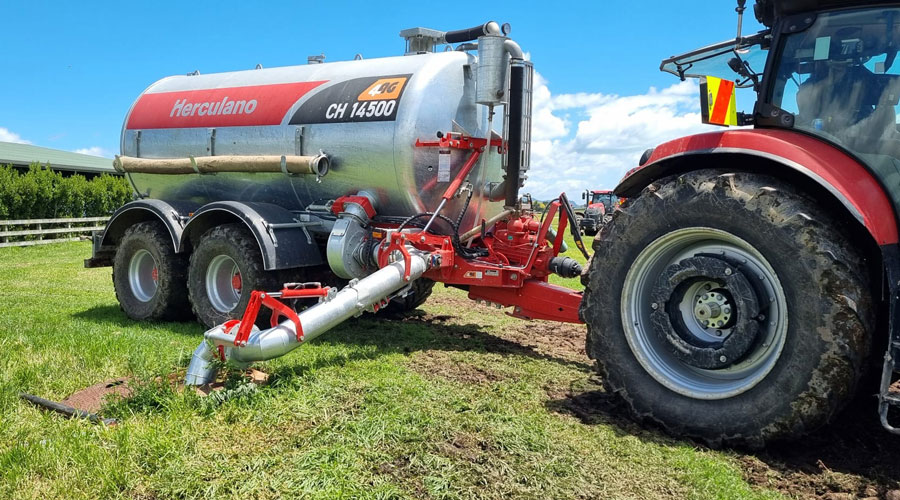
Effluent spreading in New Zealand rarely follows a neat pattern.
Some farms load from ponds. Others from sumps. Many have under-barn storage, above-ground tanks, or bladder tanks. And on plenty of properties, there’s more than one storage system operating on the same farm.
That variety isn’t unusual — it’s simply how NZ farms have evolved.
The Real Challenge Isn’t Storage — It’s Loading
Where problems start is when machinery isn’t built to cope with that variety.
For farmers, that can mean trying to make new equipment work around existing infrastructure. For contractors, it means repositioning tankers, extending hoses, or improvising safe loading methods — sometimes several times in a single day.
The common mistake is assuming the farm needs to adapt to the machine.
In practice, the most efficient effluent operations are the ones where the machine adapts to the farm.
Flexibility at the loading point saves time. It reduces frustration. It lowers risk.
Why Loading Arm Design Matters
Loading flexibility starts with movement range.
A well-designed loading arm needs three things:
-
Reach — to cover different distances and heights
-
Working arc — to fold low enough and lift high enough
-
Articulation — to fine-tune the connection point without moving the tanker
This is where a double-joint hydraulic loading arm makes a practical difference.
The lower pivot mounting point widens the working arc. That allows the arm to fold further down — even below horizontal — which is critical when loading from lower storage such as sumps or under-barn systems.
The second pivot point adds articulation. Instead of relying on tanker positioning to achieve alignment, the operator can adjust the end of the arm hydraulically. That control makes positioning precise without becoming fiddly.
Add the ability to run a short flexi hose when required, and the same system can load:
-
Directly from a sump
-
Accurately into a tripod
-
From a pond with offset access
-
From above-ground storage
Without modifying the setup.
Without compromise.
NZ DNA: Built for the Way We Farm
New Zealand farms aren’t built to a template — and neither are their effluent systems.
That’s exactly why 4AG slurry tankers are designed with a hydraulic double-joint loading arm.
It’s practical engineering for real-world layouts.
It allows operators to approach each job in the safest and most efficient way available on that property — whether that’s a deep sump, under-barn storage, or a pond at the back of the yard.
Flexibility isn’t a feature added for convenience.
It’s built in because NZ conditions demand it.
When Your Setup Isn’t Standard, Your Tanker Should Be Ready
In a country where no two effluent systems are the same — and many farms run more than one — flexibility isn’t a bonus.
It’s a requirement.
If your current loading setup involves extra hoses, awkward positioning, or unnecessary time in the yard, it might be worth looking at a system designed to adapt to your farm — not the other way around.
4AG Slurry Tankers — no more mucking around.
Find out more about 4AG Slurry Tankers here